


Dr_Heech
-
Posts
3776 -
Joined
-
Last visited
-
Days Won
55
Content Type
Profiles
Forums
Events
Gallery
Store
supertorial
Everything posted by Dr_Heech
-
I call it the flowerpot top block.
-
@reubensangwich Just to say, my reason for the slow fades was because it took me a pair of Csf WW2 (size 34), a pair of 46 (35) 1st half's and a pair of 41's (36) before my 4th pair ( 2nd pair of 1941's) finally fit me (and my 5th pair, bf's old WW2 denim pocket bags pair) - both in size 38 waist. Both pairs now have very promising fades but have useless front pockets imo, way too shallow. Lush details though.
-
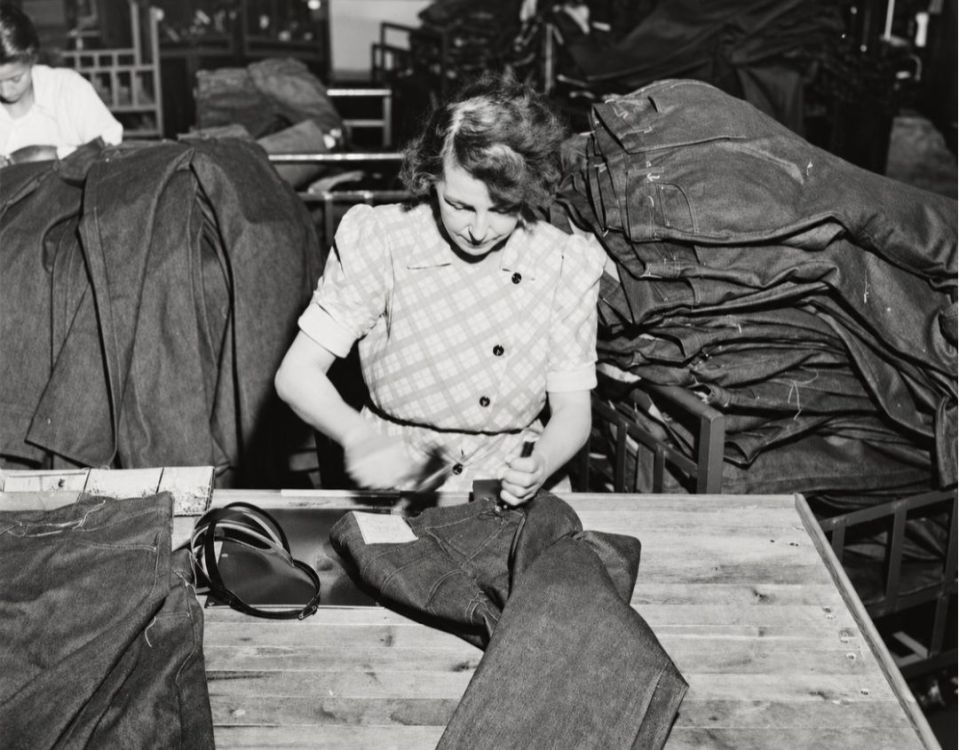
Tell me about it, l had many vintage pairs run through my hands back in the late 80's and early 90's that would have made me rich, but l was a poor student back then but l loved wearing them but needed money, so a double edged sword My biggest regret being a pair of early 60's XX l bought for 18 quid from a second hand shop in Bath. They were mint and a great size. Ended up selling them for 200 quid in London. I was chuffed to bits until the very first Vintage magazine came out (it was more of a pamphlet really) and suddenly prices had surged x10 ! So in a matter of a few months l could have sold them for 2k. Tbh they are just jeans, and l wore most pairs l bought over the years before selling them and hardly a photo to document. Doesn't bother me though as l've enjoyed this Sufu/DB/Sufu experience even more. Just to keep us on topic ... Lady worker riveting a pair of 40s levis
-
Morning Neal, really good to see that image again. I remember you posting it years ago on DB. Wasn't it a Marvin's piece?
-
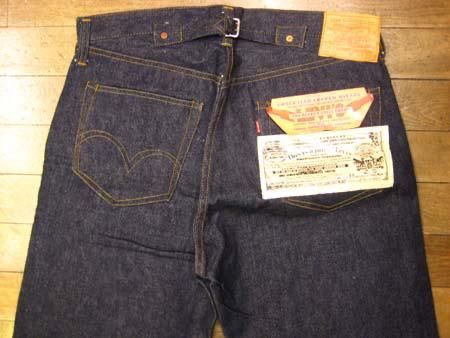
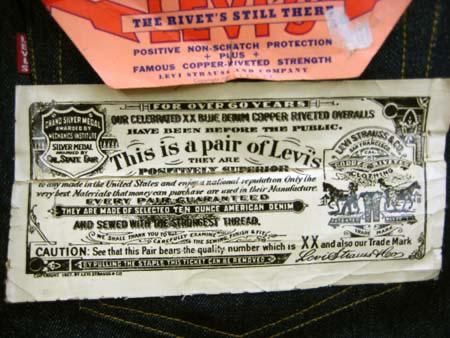
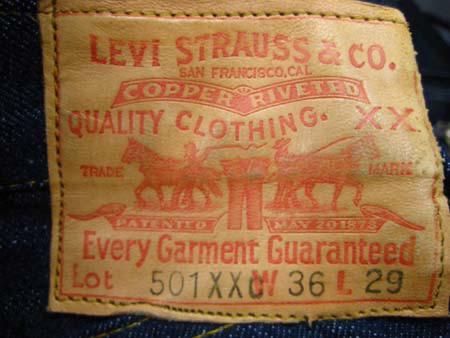
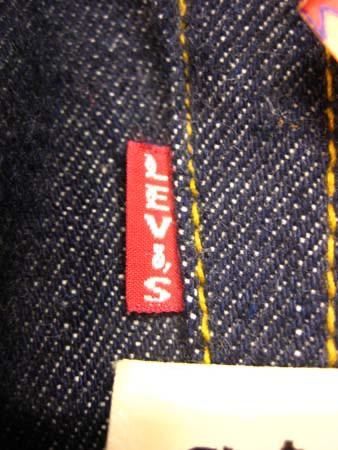
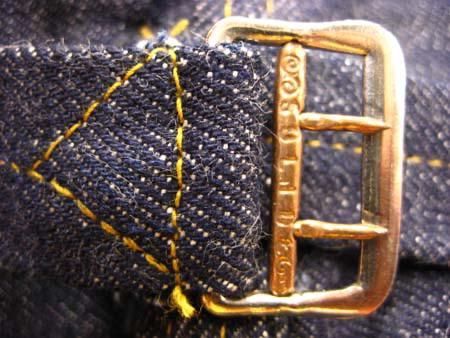
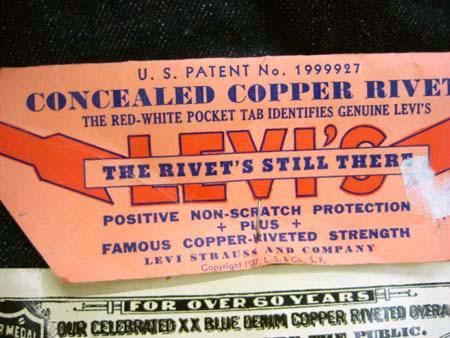
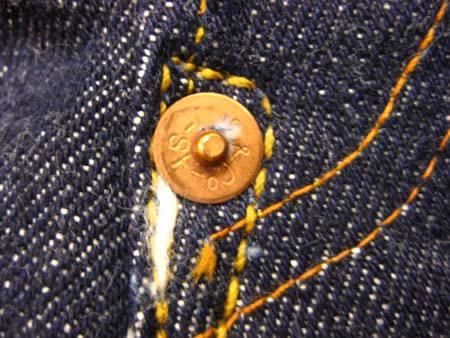
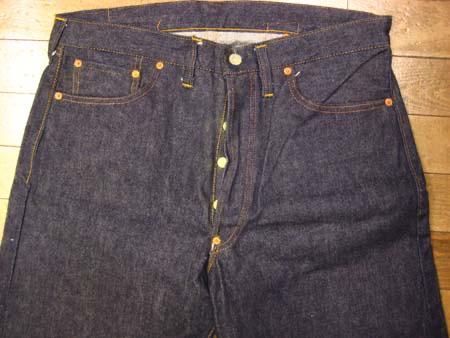
Apologies if the photos are too small or a bit blurry, but these are the only images of the rare 1937 Levi's 501XXC model in deadstock/nos condition that l've ever seen, so l thought l'd share here. I've also put an image in the original post explaining all the four different models on page one. ^mix of thread colours ^copper and silver 1937 buckle ^The very first red tabs were smaller than 1940's tabs ^Copper Riveted and most notably, the C after 501XX ^Interesting to note that the earliest model still sports the For over 60 years Guarantee ticket, along with the 1937 1st pocket flasher, which still states the denim weight as 10oz. Beautiful example.
-
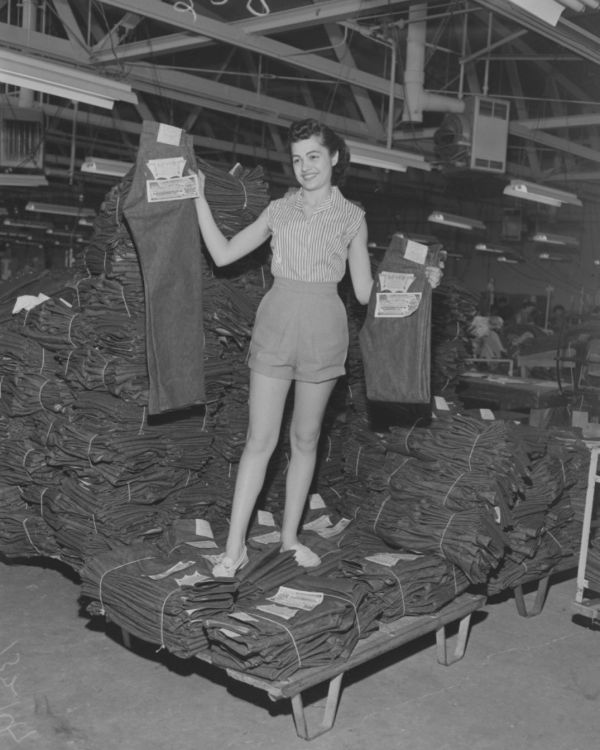
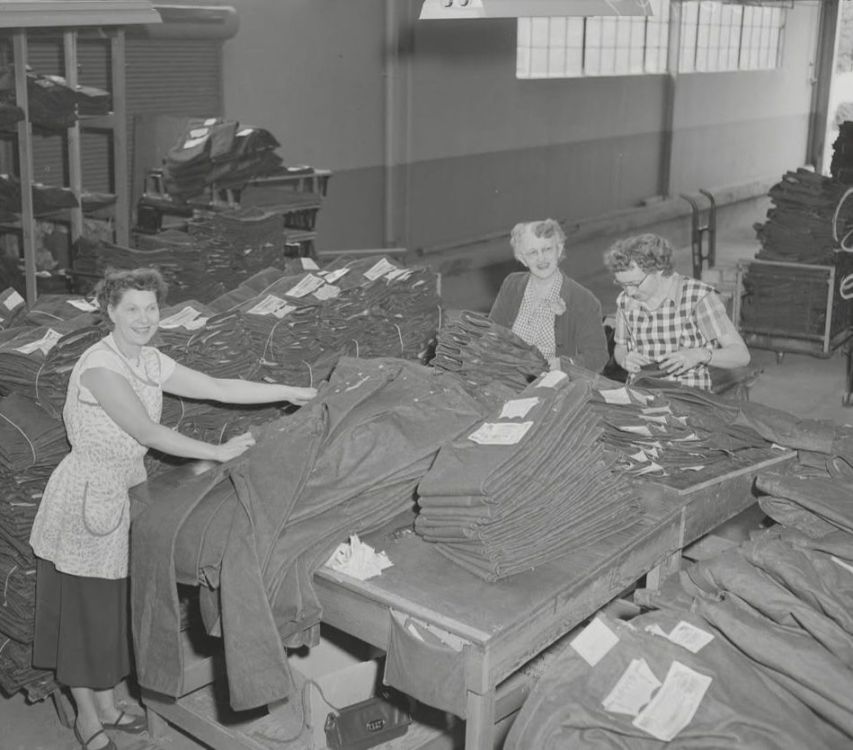
Not sure of these images are sharp enough to see in any detail but lovely old factory photos showing finished pairs, pinched from the interweb -
-
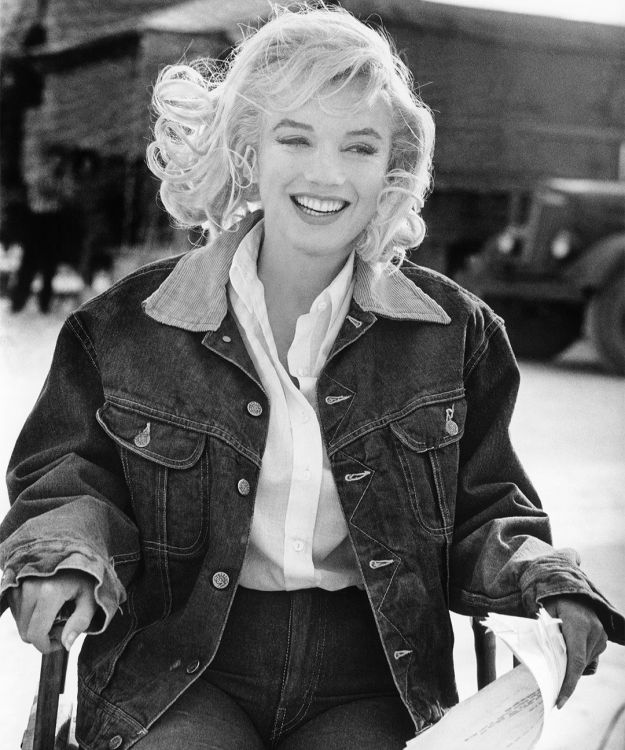
Another shot of Marilyn Monroe taking a break on the set of The Misfits. The three things l always wanted to know about her Stormrider: How old is it? Always tried to see the lining in the movie but never seen a clear enough shot of it. The other two questions are answered here: Corduroy collar: l can see the corduroy collar lies perpendicular to the collar edge rather than running across the collar (like my old one) and being a 1960 film, does it have an R after Lee or not? Well we can see that the black Lee tag from the left pocket flap has been removed completely so we have a conclusion if no answer. Click twice for clarity.
-
So in conclusion, for me at least, there are roughly five main models of the Lee 101B Cowboy pants: 1. Early blue ribbon leather patch model with back pocket rivets (c.1926-30?) 2. Later blue ribbon leather patch model without back pocket rivets (c.1931-33?) 3. Triple name model with both types of leather patch (c.1934/35?) 4. Early Hair on hide patch model (c.1935-1937?) 5. Later Hoh patch model (c.1938-42?) I haven't researched the buttons or rivets in any depth really as there's not enough pairs to reasonably dissect and not enough detail in the images as they are too small. There are early brass colour buckles and there are cheaper looking, wire buckles, but no continuity in the time line. Selvedge looks to be half blue-line selvedge then full blue-line selvedge, then white selvedge but it's all guesswork. Anyway, it's a start. I will happily update and add to the above posts if anything interesting comes my way. Hope you enjoy.
-
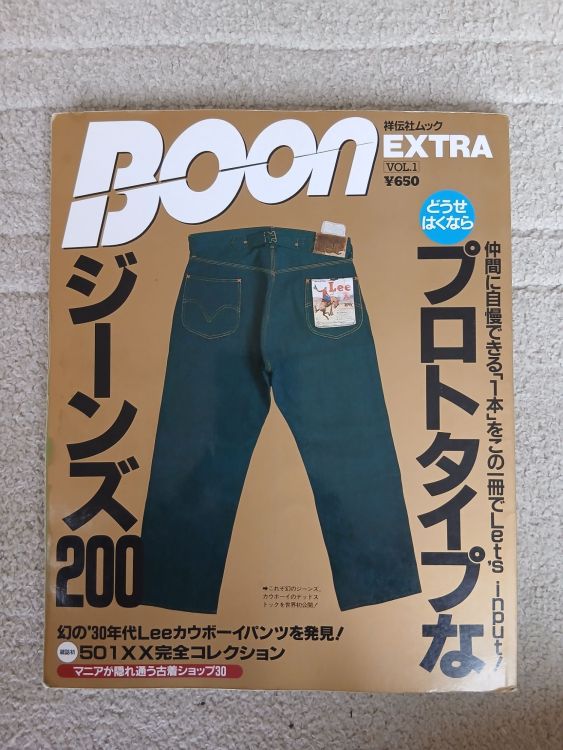
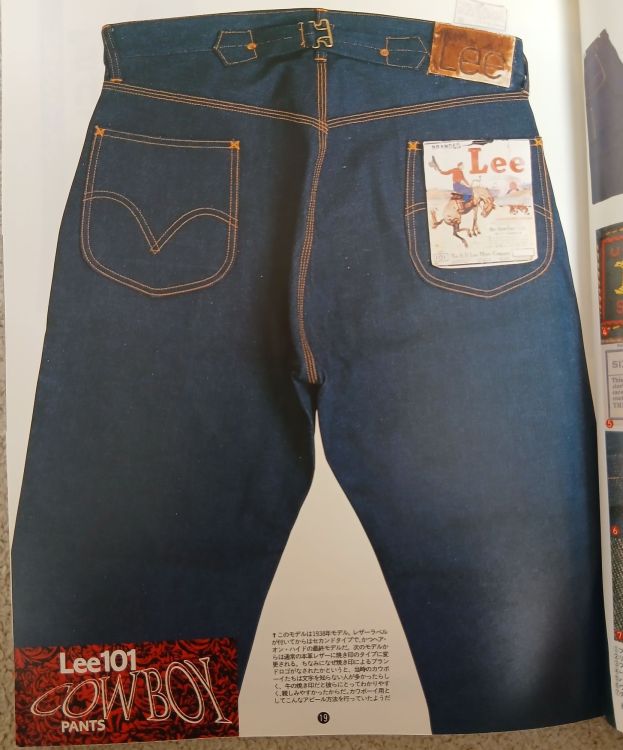
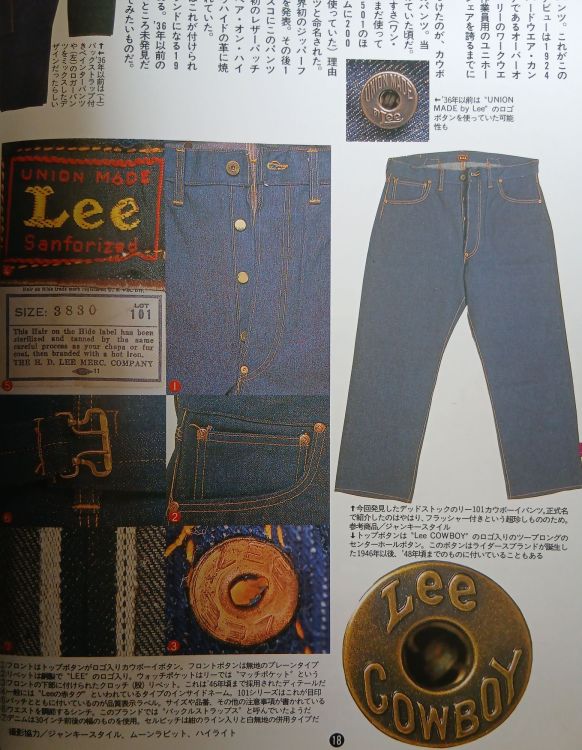
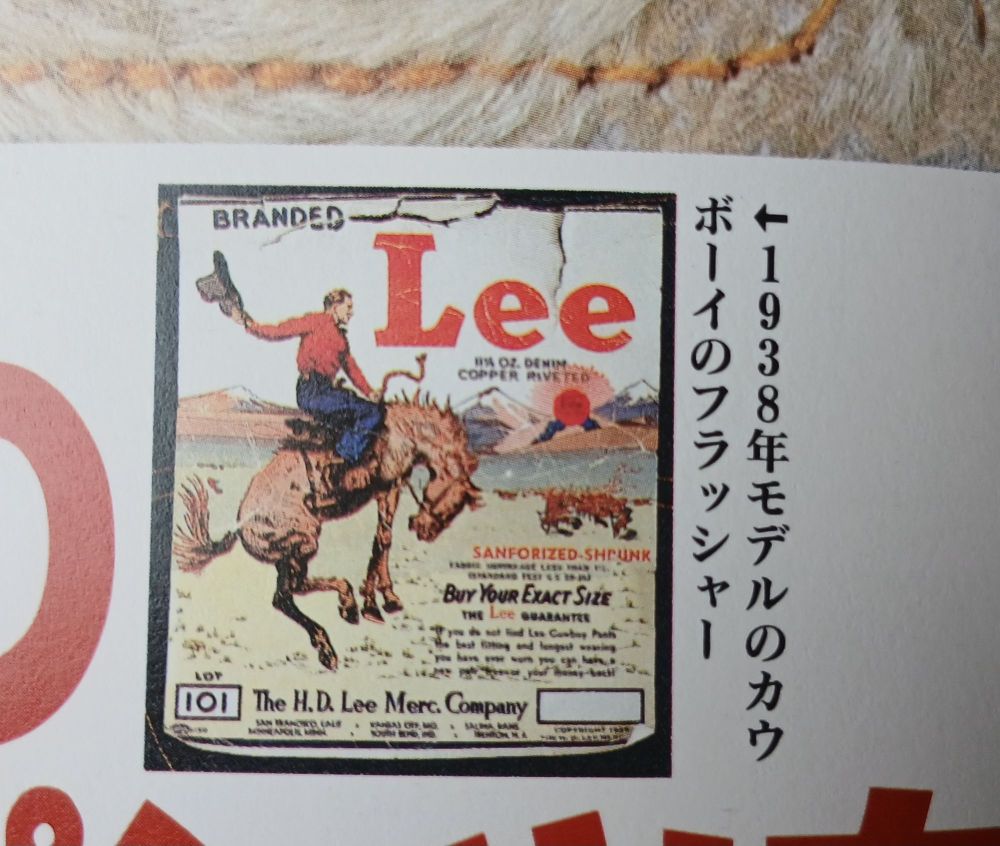
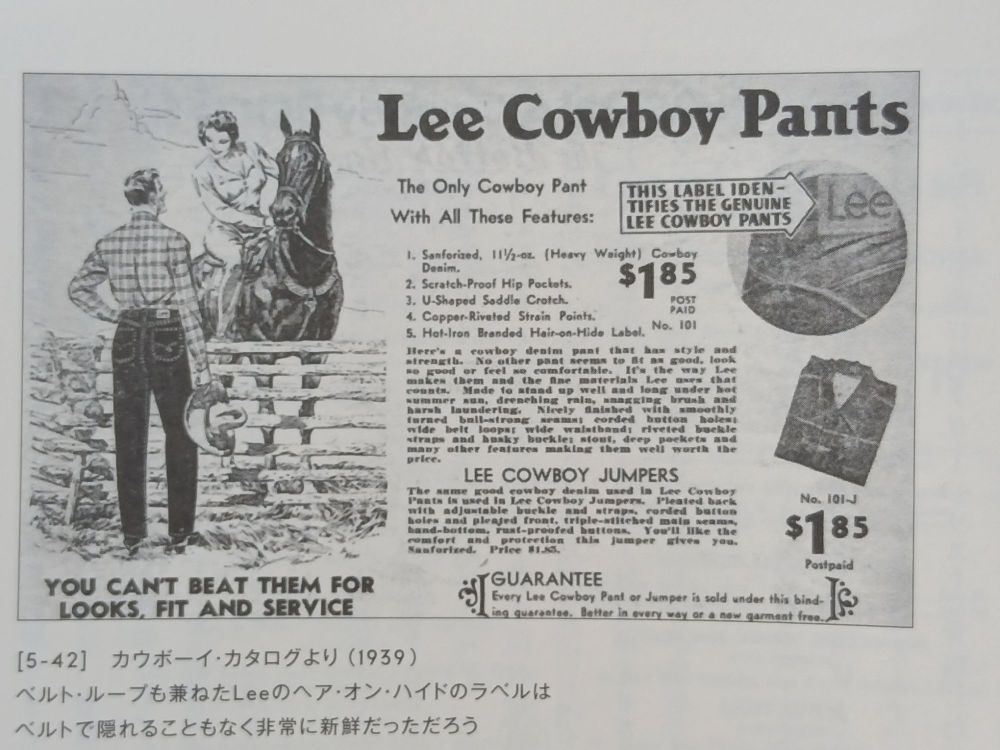
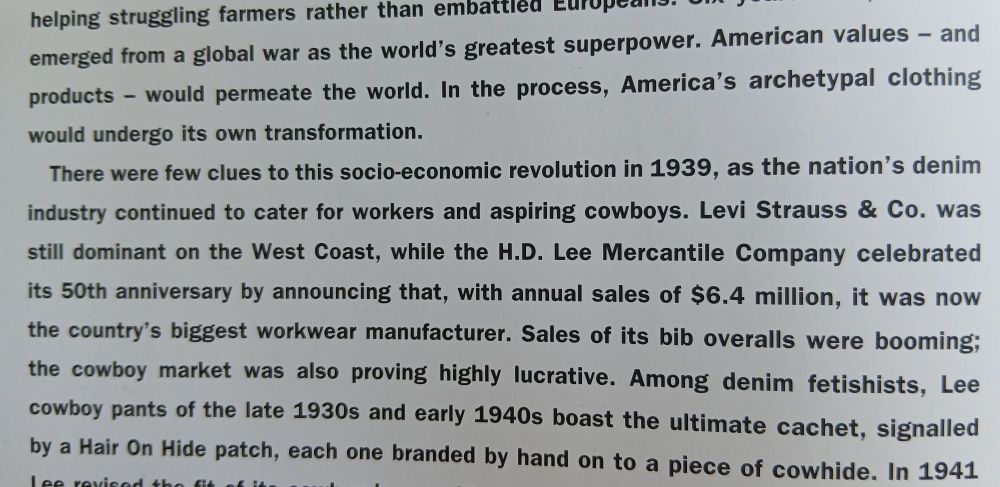
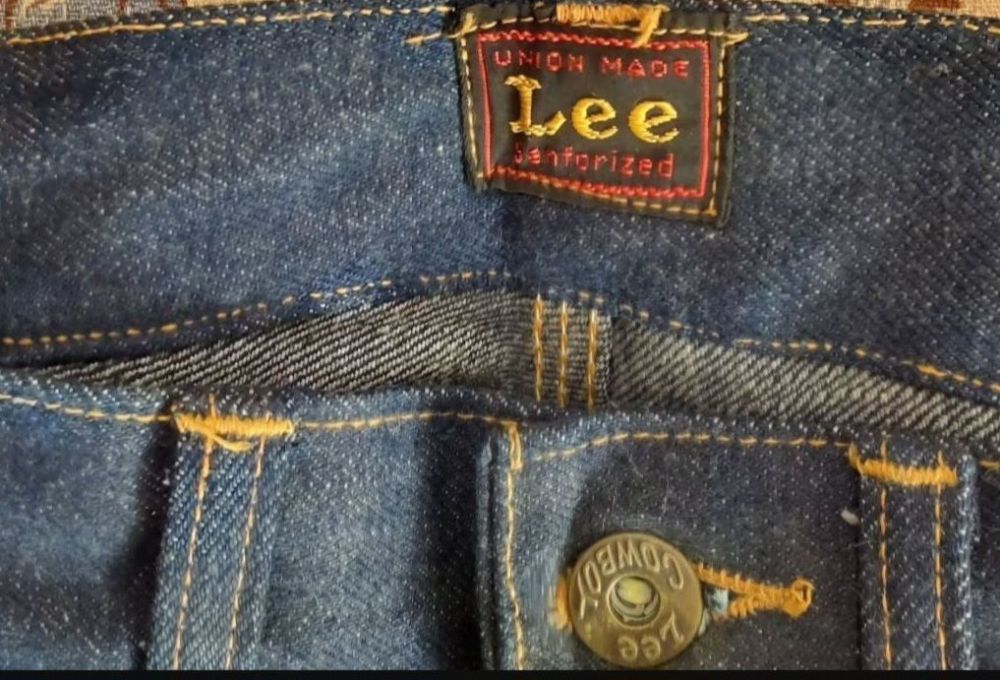
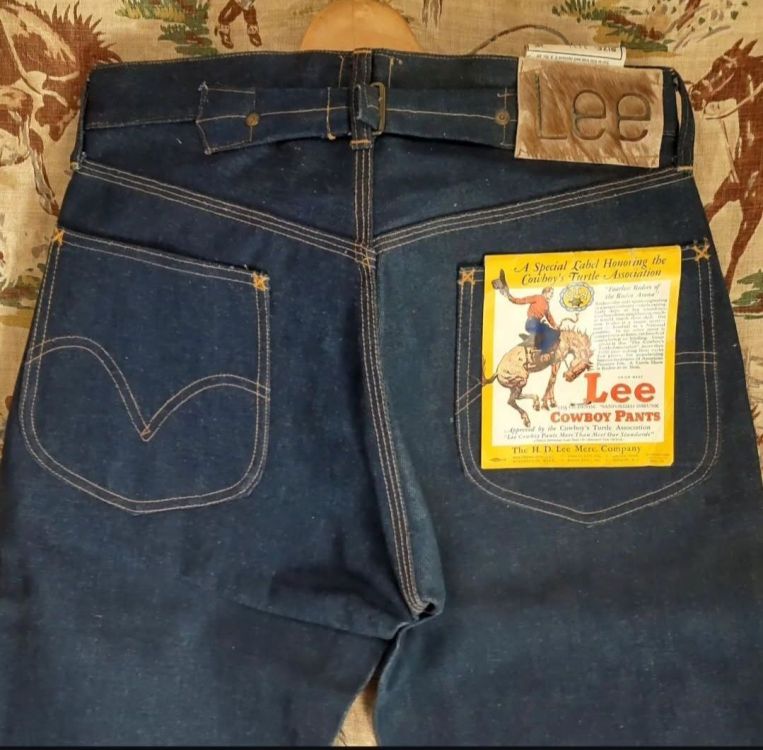
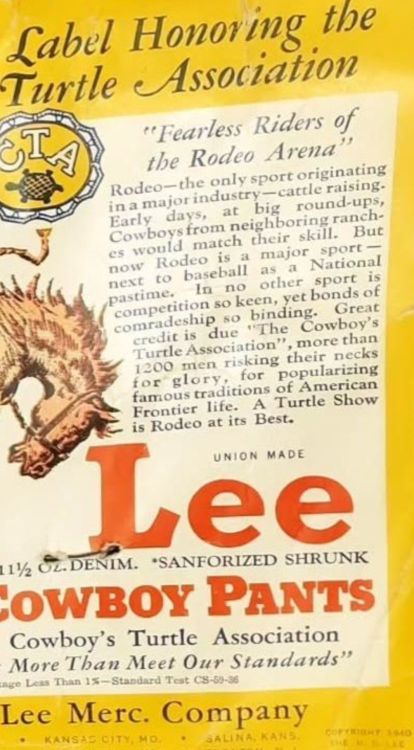
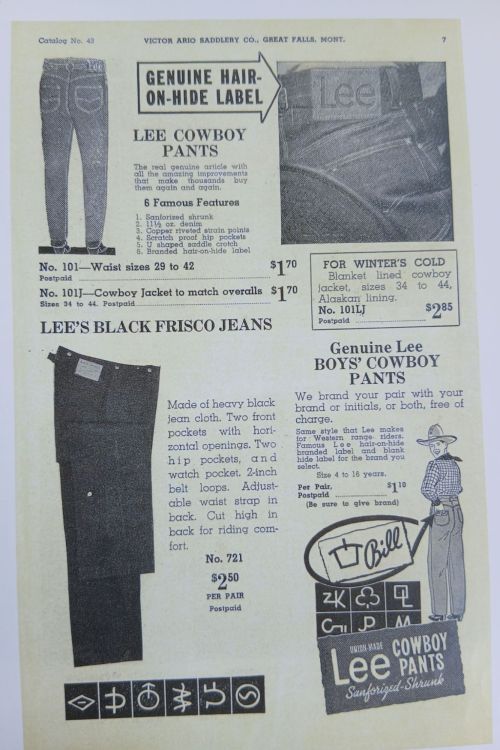
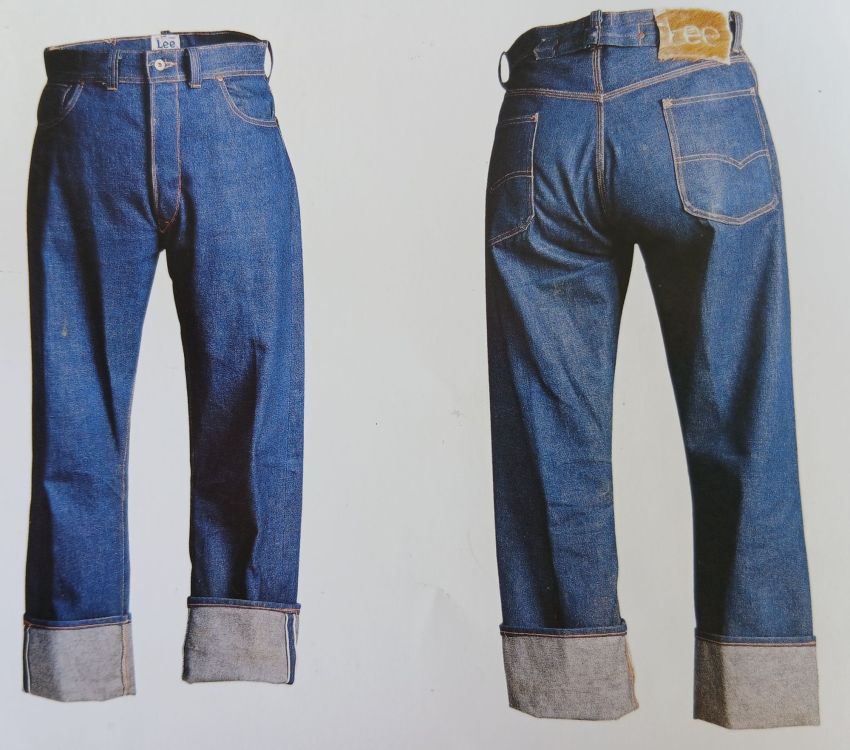
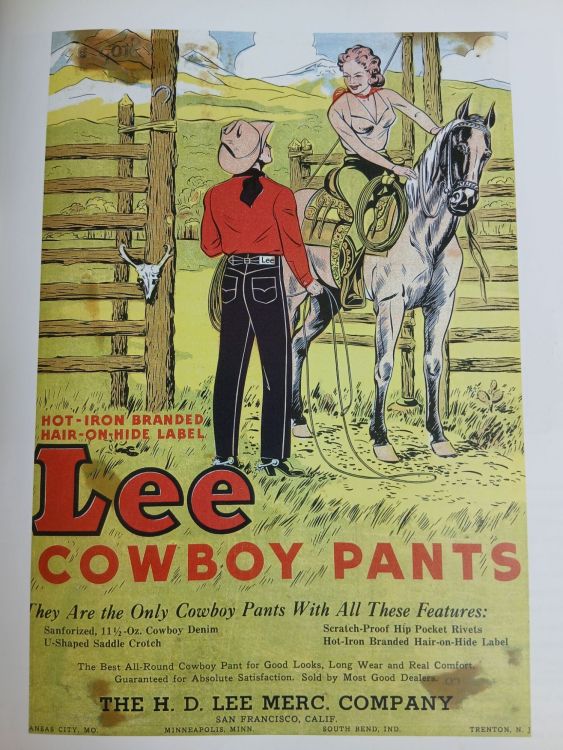
Hair on hide patch Lee 101B Cowboy pants. ^If we take a look at the last two pairs in the above post (#3 and #4) we can see some key detail changes from the triple name model which make me think they are also Hair on hide models but early versions. Firstly, the evidence of leather patch placement (on the right side of the waistband), the centrally placed inside red/gold label and most importantly, the yoke is no longer overlapped as before. If we take a look at the arcs on pair #4, it is what l believe to be early twin needle stitching. New sewing innovations meant newer construction techniques. Around this time Lee first mentions their U shaped cotch on the jeans - for more comfort whilst sat in the saddle. It is difficult to say with any certainty when exactly the twin needle stitching was being used by Lee, but it was certainly there by 1938. #1 Below is the deadstock Lee cowboy pants from Boon Extra vol 1 ^Straight away we can see that there are many changes: the jeans now have a single chainstitched waistband, the word Shrunk is removed from the inside label, so now just reads Sanforized, Theres now an added size/info label attached to the Hoh patch, and most noticeably are the twin needle arcs with the 'diamond ' stitch in the middle on the back pockets. Don't forget, Levi's only trademarked registered their pocket design in 1946/7 so it was still being used by many manufacturers in 1938. ^close up of pocket hang tag illustrating Lee's core values. Ever since 1927, the name Lee was synonymous with American frontier traditions. Of the all the images and info available to me at my disposal, there are literally no real construction or detail changes that l can find with Lee cowboy pants made between c.1938 and the introduction of the war model in 1942. #2 The pair below, a well worn pair, show the Hoh patch to be worn away, so less hair - at first l was thinking that there was more than one type of Hoh patch but now realise that it is not the case. They are the standard 1938-42 model. #3 This unique pair below have what looks like iron rivets, which are also unmarked - not like regular lee rivets which are stamped with LEE. Maybe a prewar model? #4 This youth's pair look to be sporting an earlier, centrally placed Housemark tag in blue and white - looks eerily similar to the 91-SB overalls label of the time. 1939 advert, great details including Lee ' jumpers' - another word for denim blouses .. ^Lee's binding guarantee on Pants and Jumpers: Better in every way or a new pair free! Below. Interesting to note that by this time Lee were ahead of the curve sales wise (courtesy of Paul T) Victor Ario catalogue 1939 also mentioning matching Cowboy jacket 101J and for Winter's cold, blanket lined 101-LJ Alaskan lined jackets ... And finally pair #5 This is the (fairly) recently discovered deadstock pair of 1940-42 Lee 101B Cowboy pants which tbh don't look much different from the 1938 pair. What they do have, however is this beautiful pocket hang tag which again, demonstrates Lee's links with Rodeo - Advert from Dude Ranch magazine 1941. That's all for now
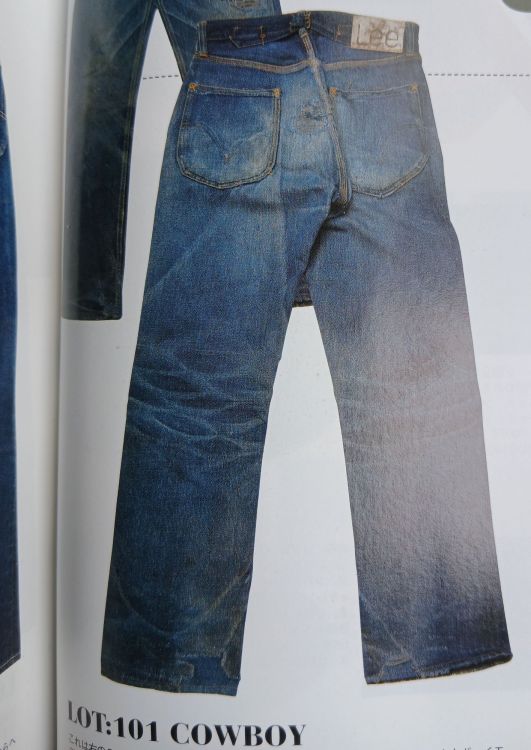
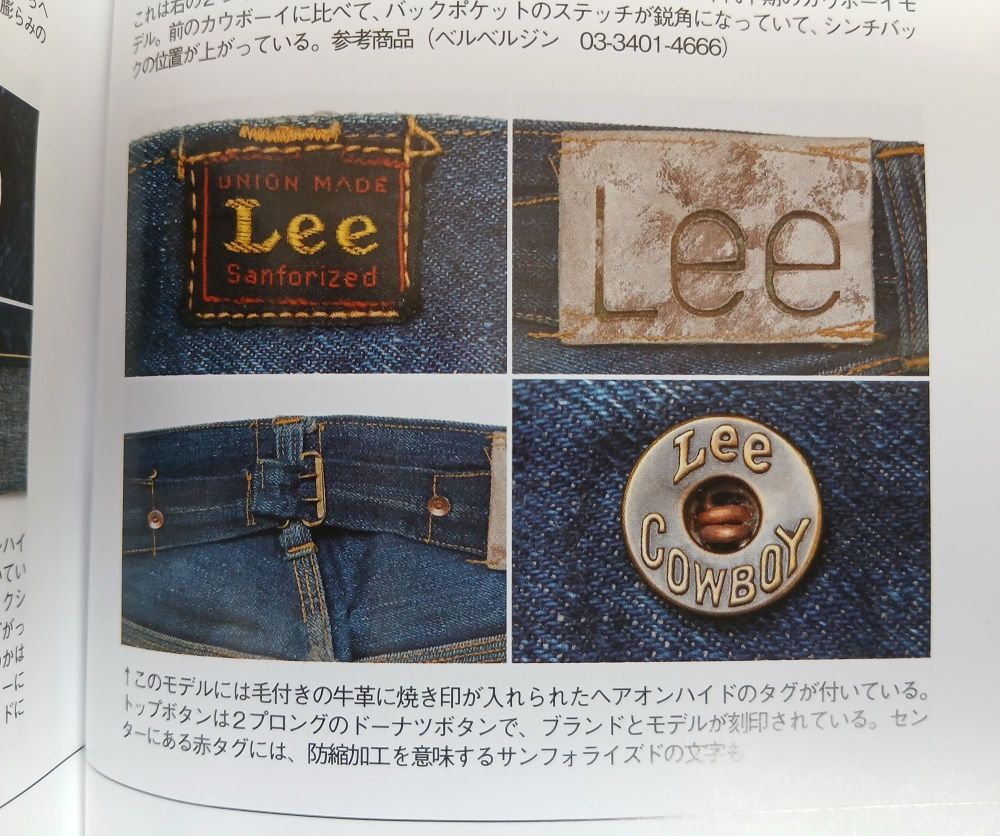
-
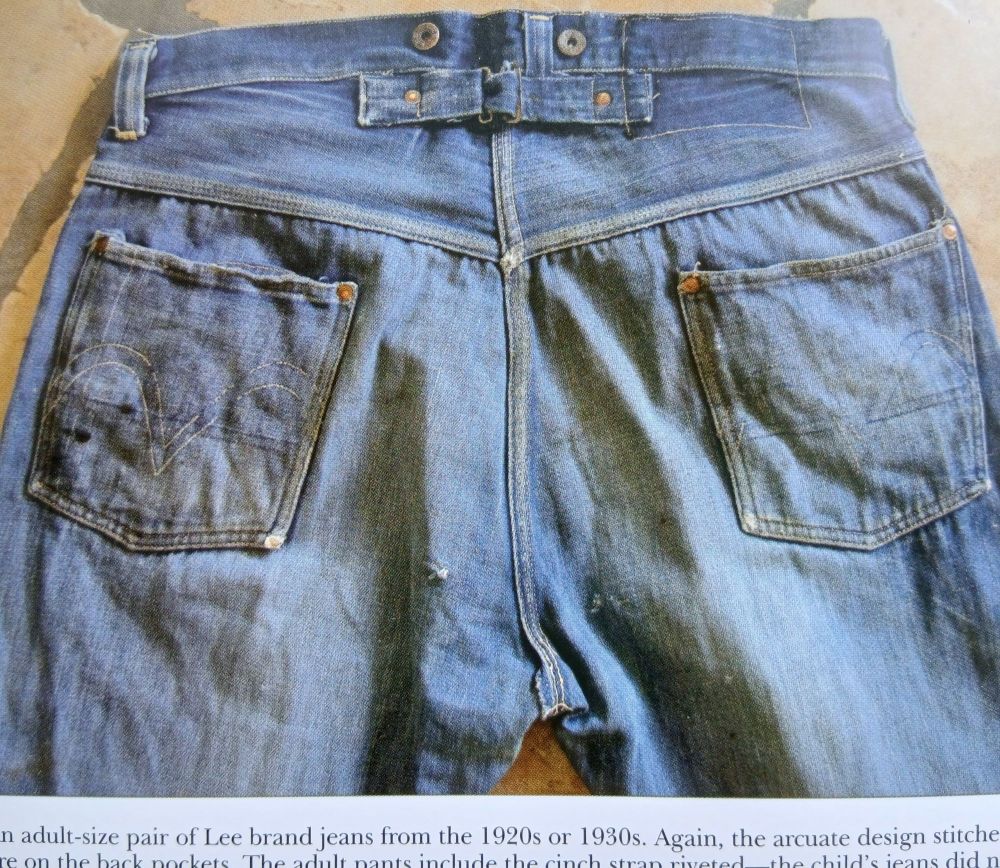
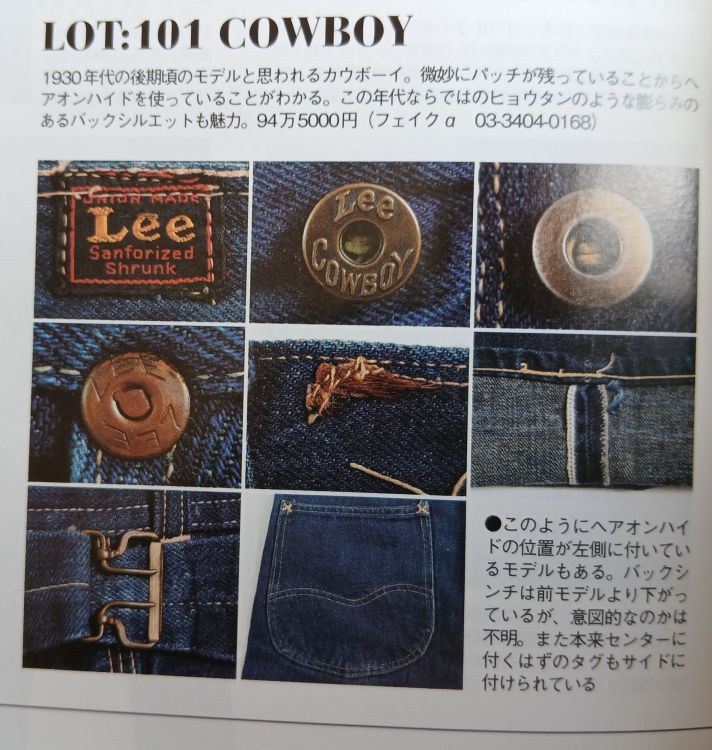
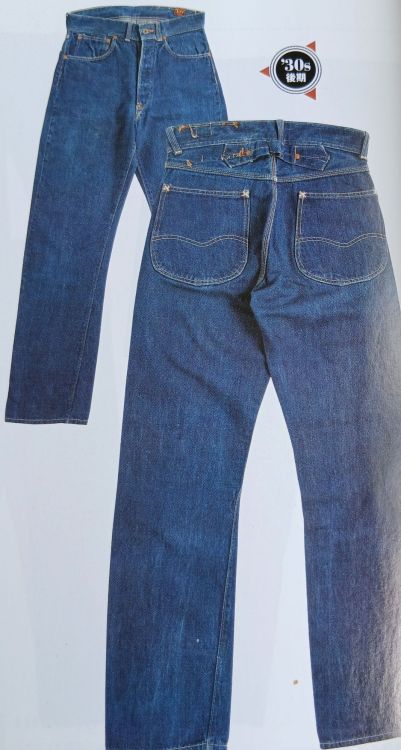
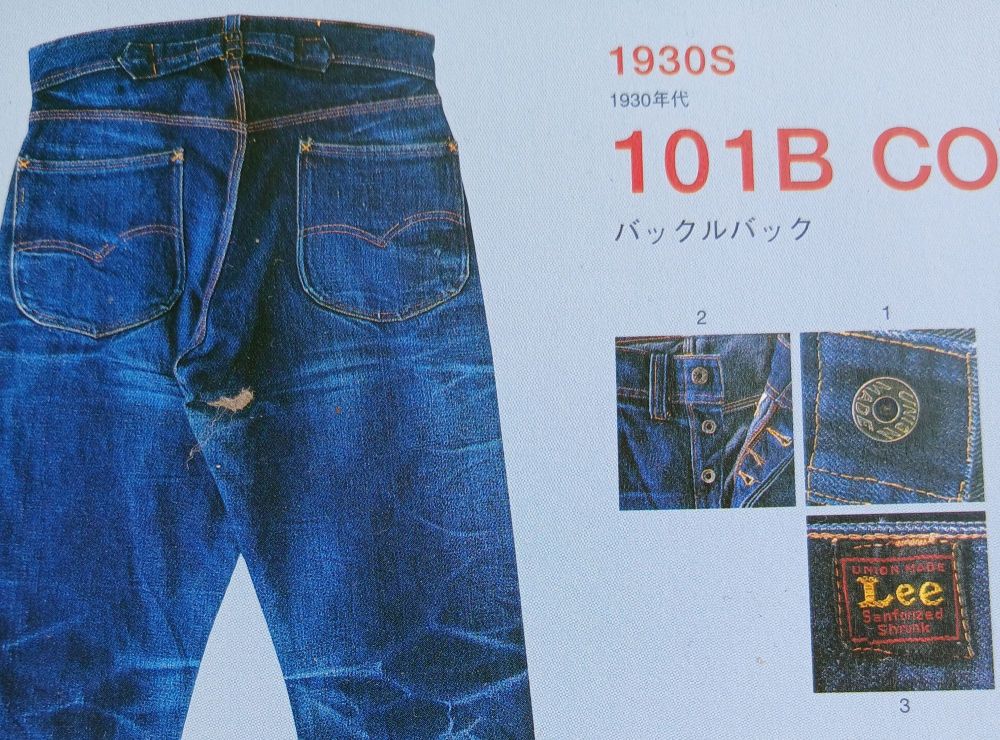
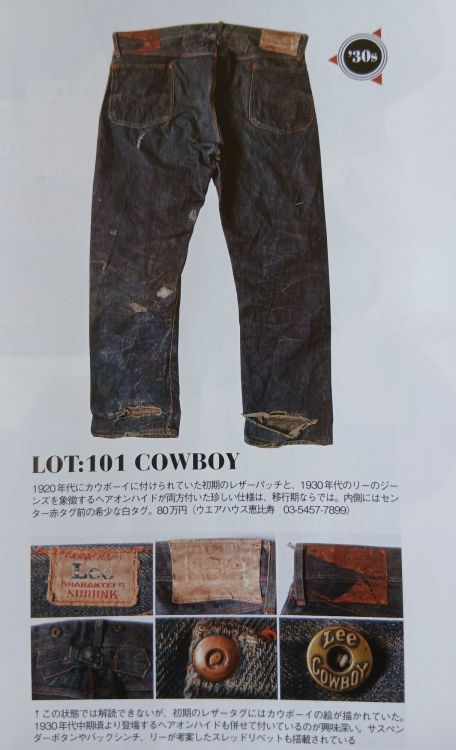
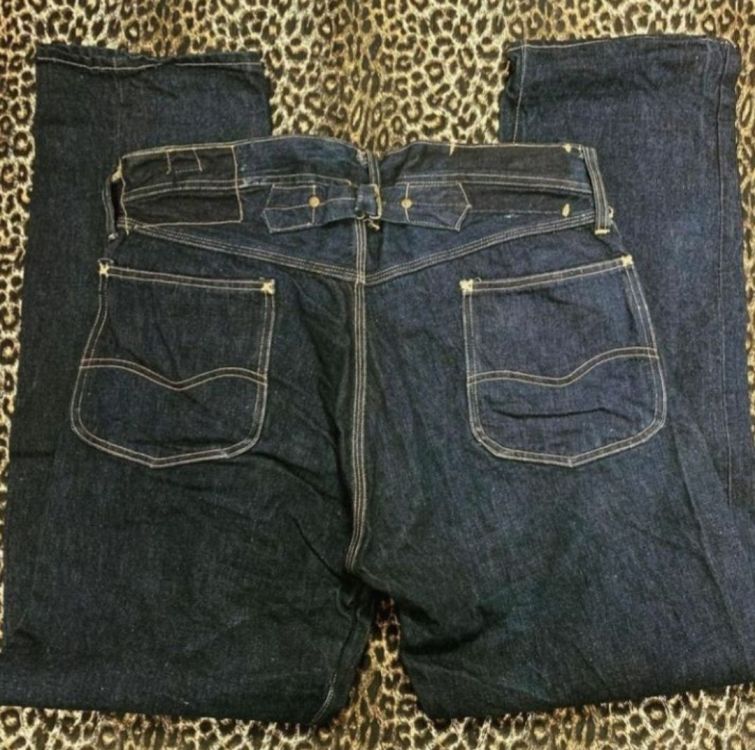
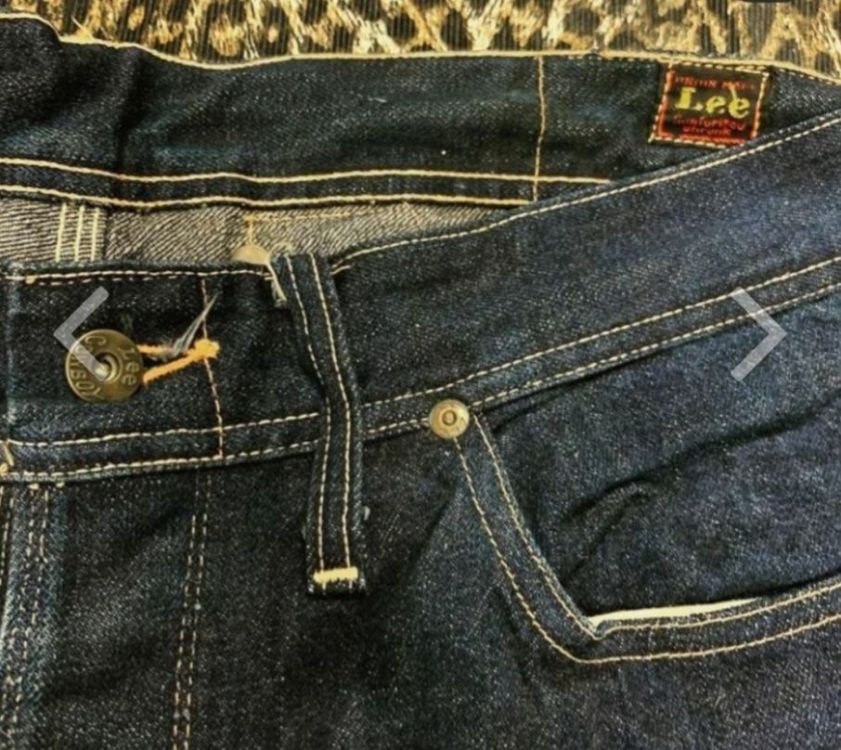
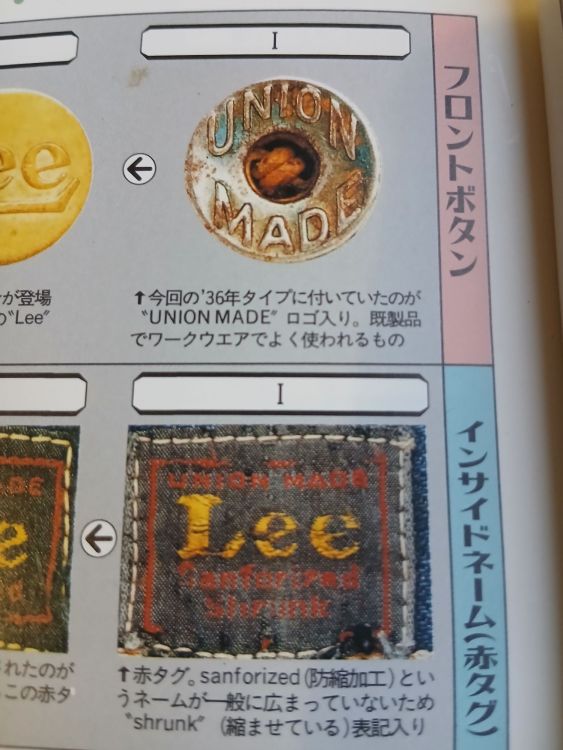
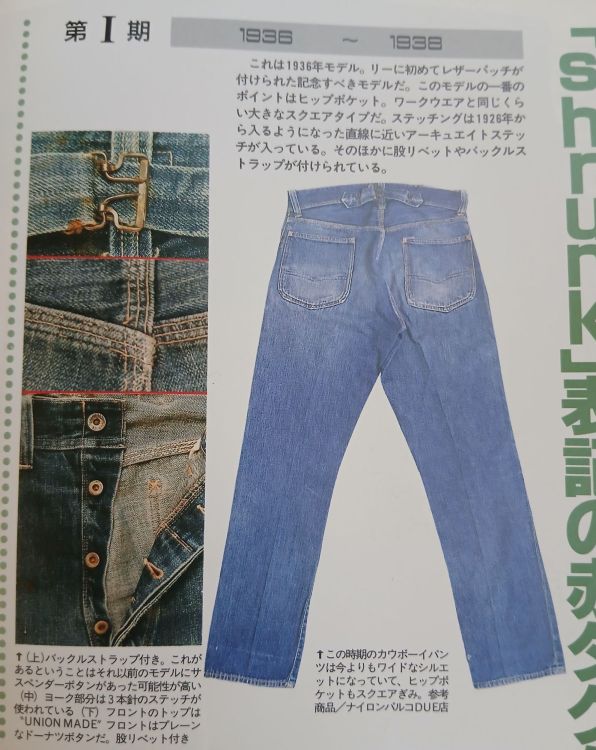
Following on.. At first l thought the next logical step in the Lee cowboy time line would be the famous Lee 101 'Triple name' cowboy pants, like the following two examples, which l believe were introduced in the early -mid 1930's? The triple name comes from the jeans having the Blue ribbon leather patch, the inside label (white with red/blue or black with red/gold) and the new Hair on hide leather patch, so three ways of identifying the Lee name. They must have been short lived models as these are the only two examples I have seen - Earlier White label model Triple name 101B, still sporting the suspender buttons - Later Red label model Triple name 101B with no evidence of suspender buttons - ^These models are where the older style, Blue ribbon patch Cowboy pants cross with the later, Hair on hide Cowboy pants. Both similar, albeit that the earlier white label pair says Guaranteed Shrunk rather than Sanforized Shrunk. They both have attributes from the second pair in the previous post (#2) , twin rows of stitching attaching the waistband to the top block, no back pocket rivets, Union Made Lee Sanforized Shrunk on the inside label, which is still placed on the left behind the Blue ribbon leather patch but also on the right side of the waistband, there's the first Lee Hair on hide patch, Dovetailed ends on the riveted buckle strap and have flatter, more stylised arcuates which hold the pocket linings in place without the necessity of the extra two rows of dark blue stitching. Seems fairly straight forward so far doesn't it? Below, a selection of the anomalies in the Lee time line which l'm having difficulty placing - Edit, placed all of them. #1 Are these another 1920's pair? They look like it: look like Lee (can't see for sure?) cowboy suspender buttons, buckleback strap has earlier non-dovetailed ends, offset belt loop at the centre rear(?), exposed plain back pocket rivets with twin row of stitching holding the pocket linings in place plus crazy levis-esque arcs as well (think these are the pair that Warehouse repro'd and Shredwin has a pair?) but don't have two rows of stitching attaching the waistband and the patch shadow just looks like a right placement only, but stitching looks like it held a cloth patch, so not Hair on hide(?) yet no evidence of an inside label anywhere on the back of the waistband. Strange and certainly needs more detailed shots to determine authenticity. Edit: l now believe these to be early 131 cowboy pants, so the budget version. They obviously have exposed back pocket rivets, but also no Lee sanforized Shrunk inside label, the remnants of (what l suspct to be) a cloth patch, as the stitching would have disappeared if it was a Blue Ribbon or Hoh patch. The back panels are the opposite of the premium Lee 101B Cowboy pants. Off set centre belt loop, like the budget version. And now thanks to new (to me) info and images, l can confirm they have triple stitched outseams, so budget 131 model, not 101B model. Suspender buttons are marked Lee Unionalls, a generic (and obviously budget) overall staple button. #2 Are these a boys version of the #2 pair from the previous post? Look to be the same apart from no suspender buttons and a red label rather than a white one.. EDIT.. they are a boys hair on hide model c.1935/36? Details... #3 This unique pair with just a Union Made button, have twin waistband stitching, Lee sanforized Shrunk in red and gold, though more importantly Centrally placed, dovetailed ends on the riveted buckle strap and arcs look double stitched but not stylised as later models yet not as extreme as earlier ones. Patch placement seems to be right hand side of waistband so early Hair on hide model And lastly #4 This pair has similar details to the above pair including centrally placed inside red/gold label, have a flatter single stitched arc and the waistband shows that the patch is placed to the right rather than the left so Hair on hide. The Japanese magazine states 1936-1938 but l don't think it would be older than 1936 as twin needle stitching seemed to appear around that time on Lee cowboy jeans.
-
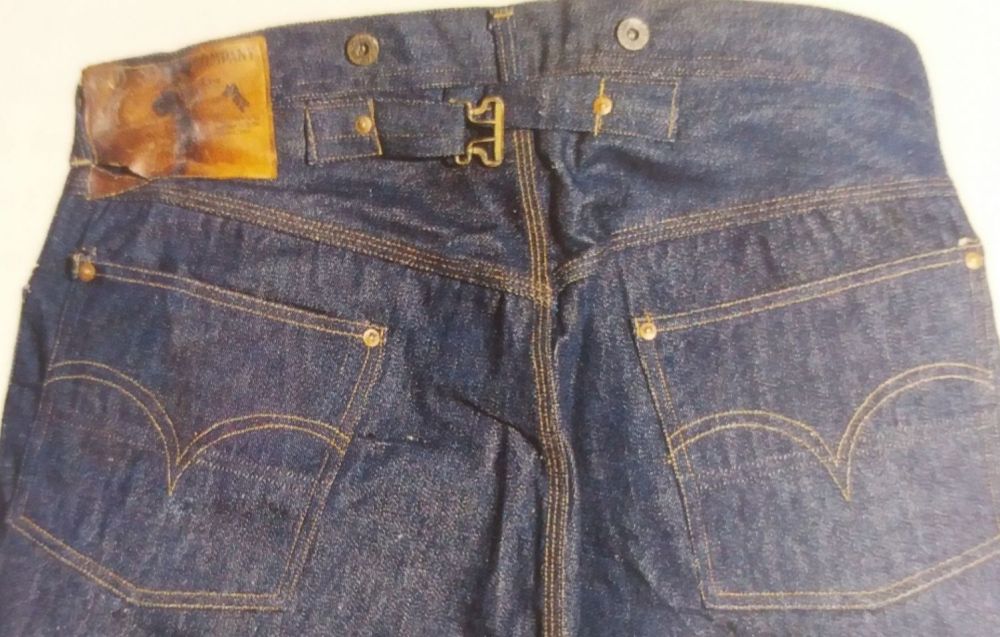
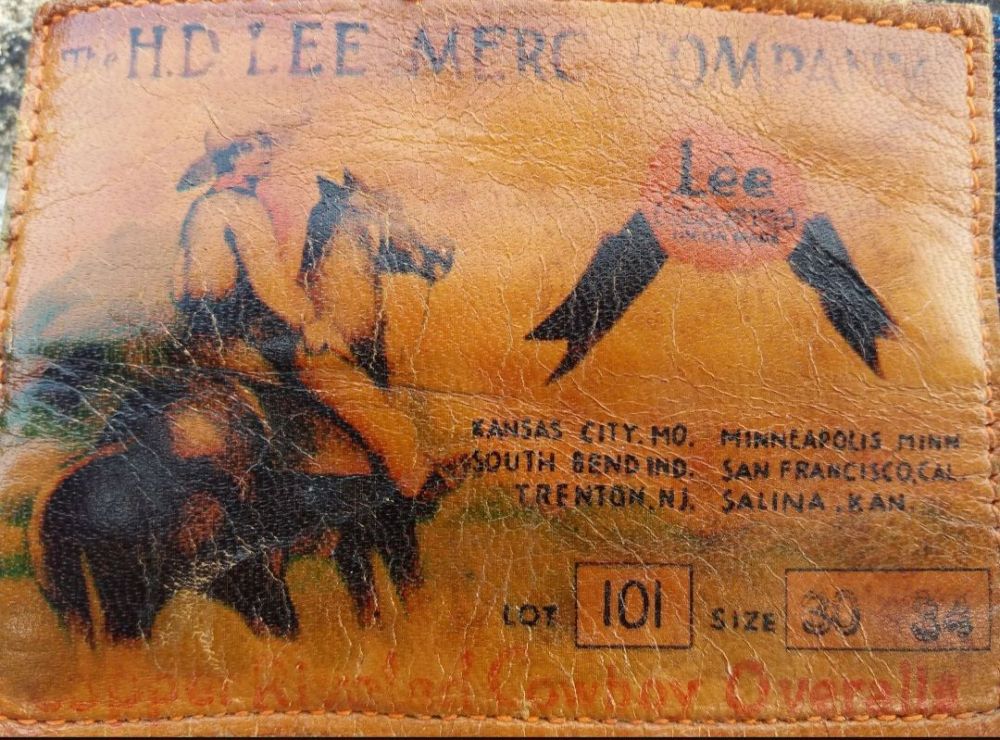
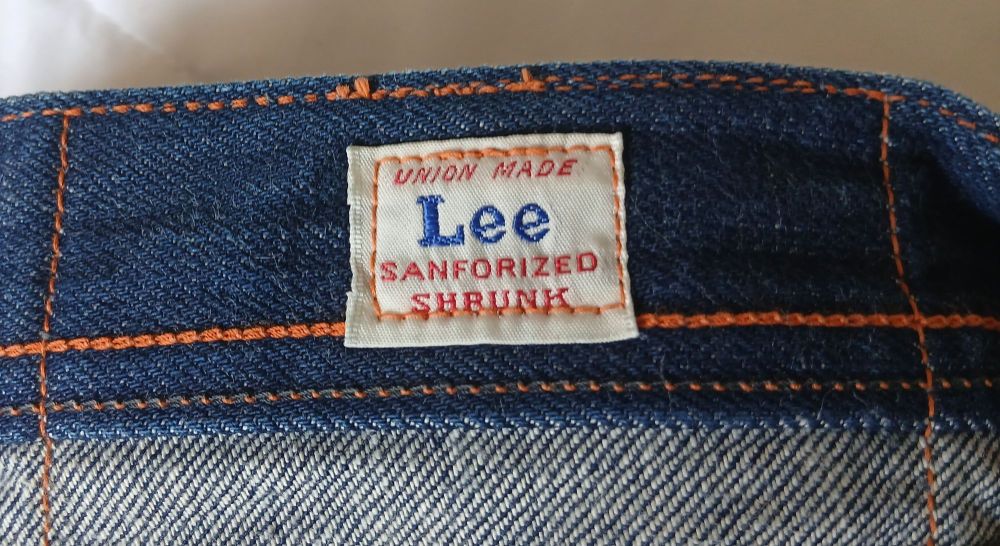
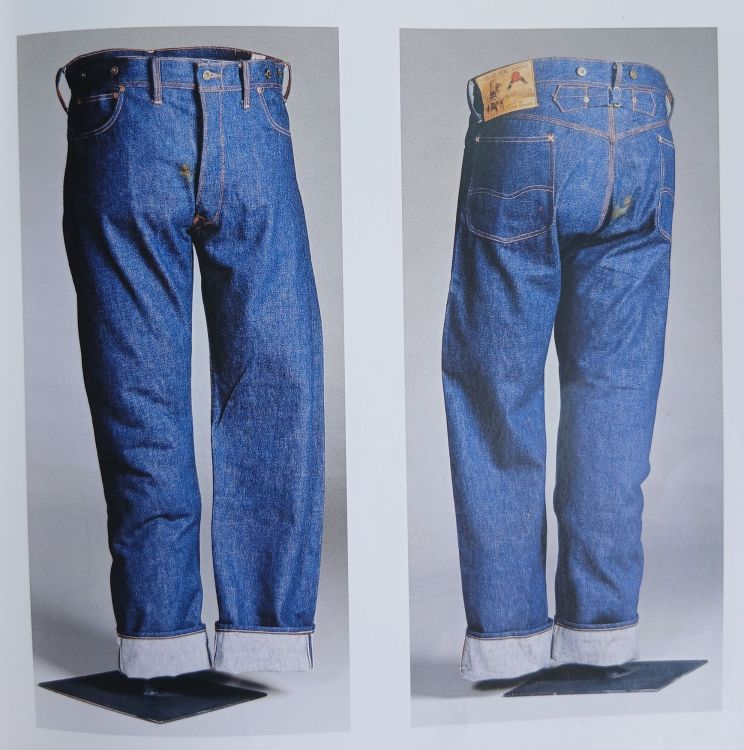
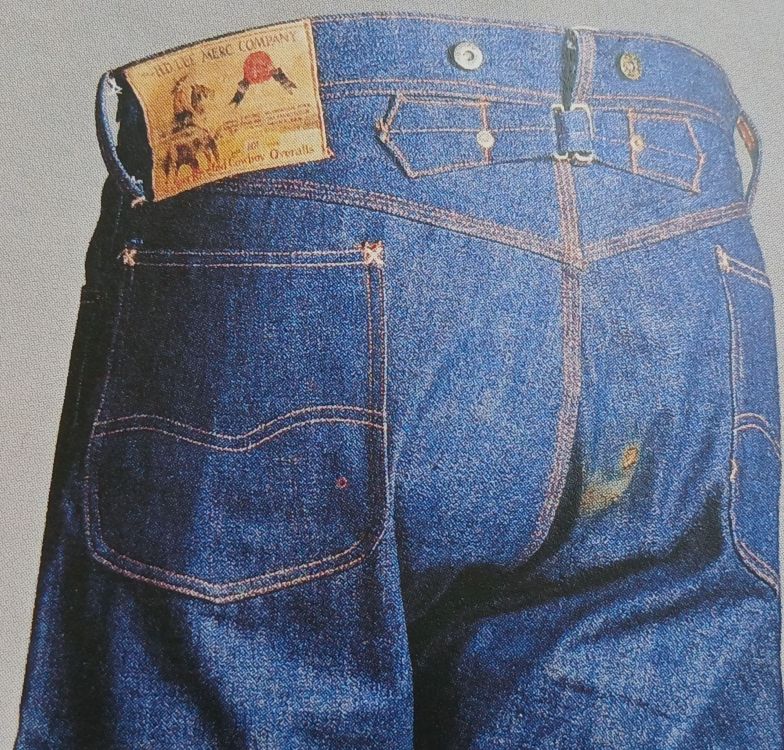
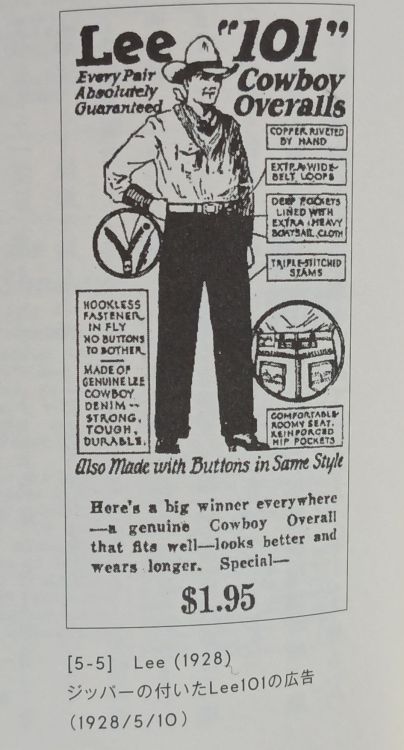
^^putting this here instead as it's not Lee repro but vintage lee only. ^This selection of images of vintage denim jeans from the late 1910's through to the 1930's demonstrates how ubiquitous the Levi's style arcuate had become and how blasé Levi's seemed to be about it being counterfeited (don't forget, it wasn't until 1946 that LS&Co decided to get the design finally trademark registered). This is just a small selection and doesn't include bigger, more competitive brands like Boss of the Road, Can't Bust em, Penny's Foremost or Montgomery Wards for example. When the H.D. Lee mercantile company quietly launched their new 101B Cowboy pants in 1924 or 1925, they blended right in with the crowded marketplace at that time, but their product wasn't a pair of generic denim work pants that could be used for just labouring, logging and mining etc - it was a product aimed specifically at The horse rider and the cowboy market in general including strong links to early Rodeo. Quick history: H.D. Lee's testimony to innovation came after their initial introduction to the workwear scene with their 11W model waist overalls in 1911 - Lee's new Union-Alls (coverall) introduced in c.1914 and were an instant success; ln 1921 they debuted their 91-J chore coat made with 'new' Cone 818 jelt denim and in 1926 they introduced their matching 91-SB overalls with the famous 4 in 1 front pocket. For fans of the Lee 101 Cowboy pants, they launched their matching 101-J Cowboy jacket in 1931 and also introduced their new budget lines, the lot 31 overalls (budget 91-SB) and Lee's 131 cowboy pants (budget 101B's) and around the same time Lee solved the problem of back pocket rivets scratching leather saddles and automobile seats by applying heavy bar-tacking there instead in the style of an X (who needs hidden rivets?). Anyway let us start at the beginning and work our way up from there: Blue ribbon patch models... #1 1920s earliest Lee 101B Cowboy pants (image from Paul T's book) ^If we take a good look at this image, we can see that this model uses the early Blue ribbon leather patch, which is placed on the rear left hand side of the waistband. The label would have looked similar to this repro one of mine - The inside waistband label would be white background with red and/or blue stitched text, usually situated behind the leather patch. It would have looked similar to this repro one - ^^^Back to that image. The buckle strap ends are not dovetailed but straight/flat in shape and have a brass coloured buckle. The waistband has Two rows of stitching attaching it to the top block and the waistband buttons state "Union made by Lee'. Other buttons used on prewar Lee cowboy pants seem to range from Union made (only) , plain Long L Lee buttons and two types of Lee Cowboy one's, one flat, the other type are slightly concave. The back pockets have double arcuates which are single stitched but also a twin row of dark blue stitching going from side to side across the arcs which hold the back pocket linings in place. Lee back pockets have always been half-lined in white cotton drill, another innovation to help with wear and tear (Wrangler did the same thing with their 11MW in 1948). The only other version of this model that l've seen was a video some years back of a guy in Canada showing us the zipper fly model (101Z) which was identical albeit for the Hookless Talon zipper, with the extra hidden snap button above that, as the zipper didn't lock so the snap went over the zipper-pull to hold it in place better. Below is a newspaper advert from 1928 which (if you click twice) you can see the two paralell rows of stitching along the middle of the back podkets as well as the levis style single stitch arcs. Also there's a small close up image of the inside of the fly with the hidden snap above it - #2 Circa 1931 Lee Cowboy pants (images from Paul T's book) - ^if we take a look at this image we can immediately see how cleaner looking they have become by this time with the dovetailed ends on the riveted buckle strap, the removal of the back pocket rivets and the shape of the pocket no longer imitates the levis one, instead Lee opted for a more shield shaped back pocket and the arcuate has become more stylised, flatter and less extreme than before which helped eliminate the need for the extra two rows of stitching as now the newly shaped flat arc held the lining in better. Remember that Lee still used single stitching until c.1936. So they still have the early Blue ribbon leather patch and the early inside white tag described earlier. They still have twin stitched waistband and waistband suspender buttons, along with triple stitched seams as before. I have 2 repros of this model, images are in the Leepro Appreciation thread. Not sure how long this model lasted or what changes came next but my next post will have more questions than answers, that's for sure.


-
Quoting these earlier posts as l don't want to keep delving back to find them. Always wondered about the actual Lee 101 timeline as it always seems Lee, as Levis main competitor, was ahead of the curve right from the beginning when it came to innovation. For example, the first back pocket rivets on their 101B model were flat, so less likely to scratch saddles and automobile upholstery. By 1930 or 1931 those back pocket rivets were eliminated and replaced with the famous Lee bartacked X's, solving the problem at least 5 years before LS&Co's hidden rivet patent showed up. Anyway l'm going to see if l can put together a more accurate timeline of prewar Lee jeans so (hopefully) l will come back with a few more answers. Edit. I've put it in the Vintage thread


-
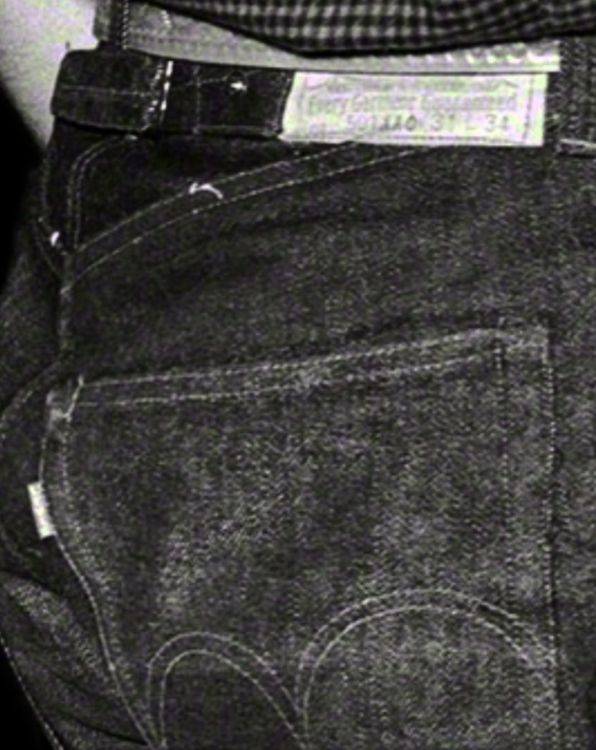
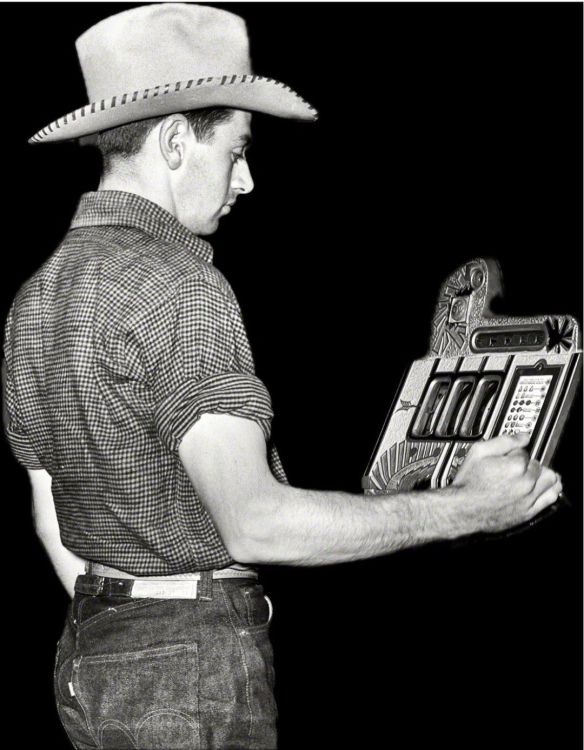
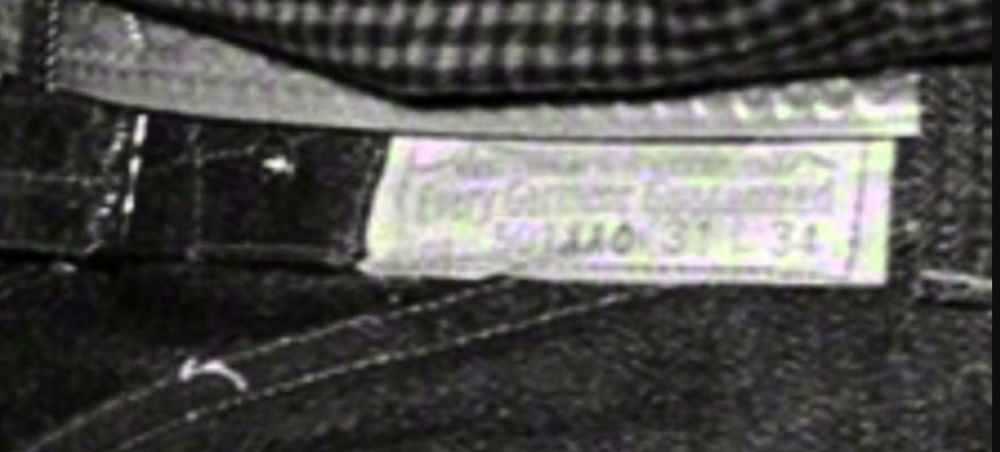
Posted this a while ago but now someone has taken a deep dive into the image to give us this - Zoomed in to show - ^ 501XXC model, the earliest 1937 model, before the 1937 first pocket flasher was introduced informing customers of Levi's new Patent and their concealed rivets. C is supposed to stand for Concealed or Covered (?)

-
@cultpop 0217 what's the shrinkage like on those 1936 Lee repros? Wasn't sure if they were sanforized or not. Thanks
-
Just checking @MJF9 - so l'm a judge and an adjudicator?
-
SUPERDENIM SMALL QUESTIONS THREAD (Use instead of making new threads)
Dr_Heech replied to minya's topic in superdenim
Yes @MJF9 - looks like you are one of us now 😁 -
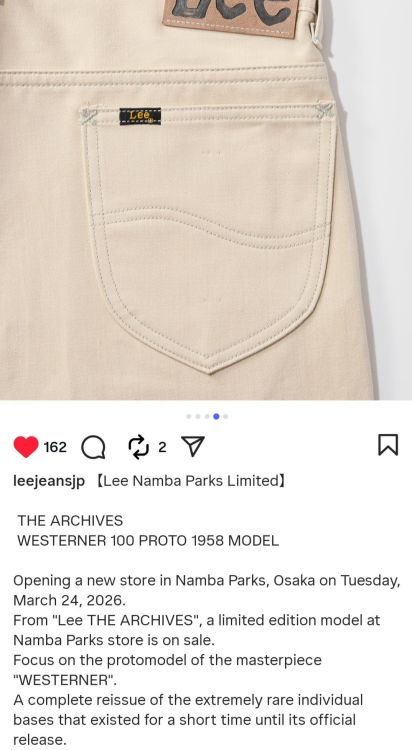
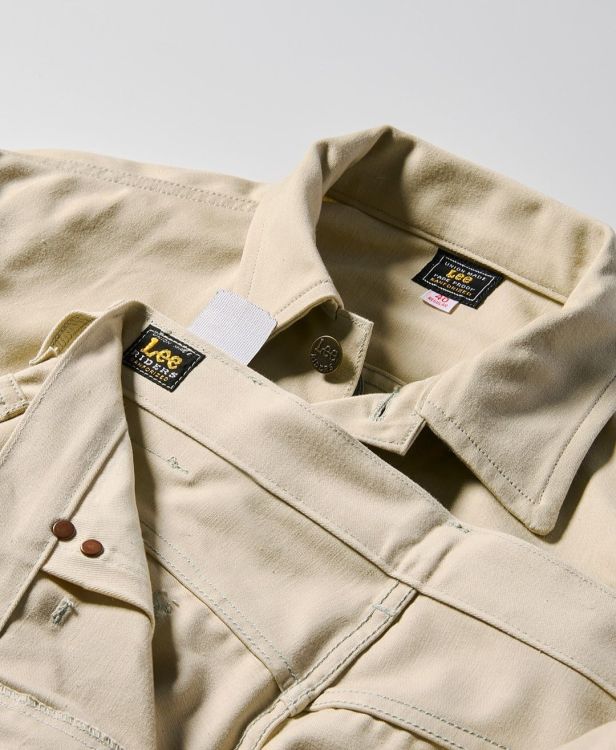
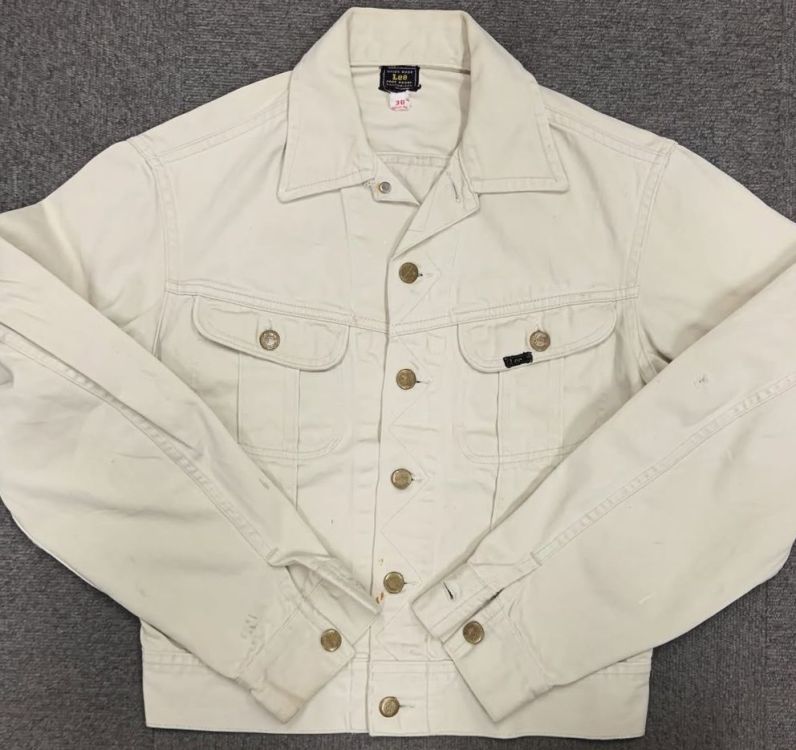
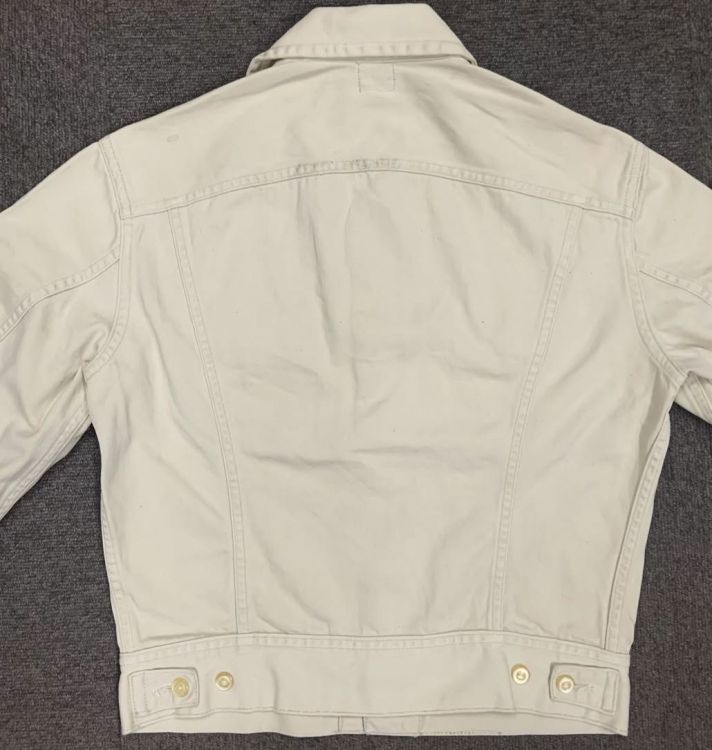
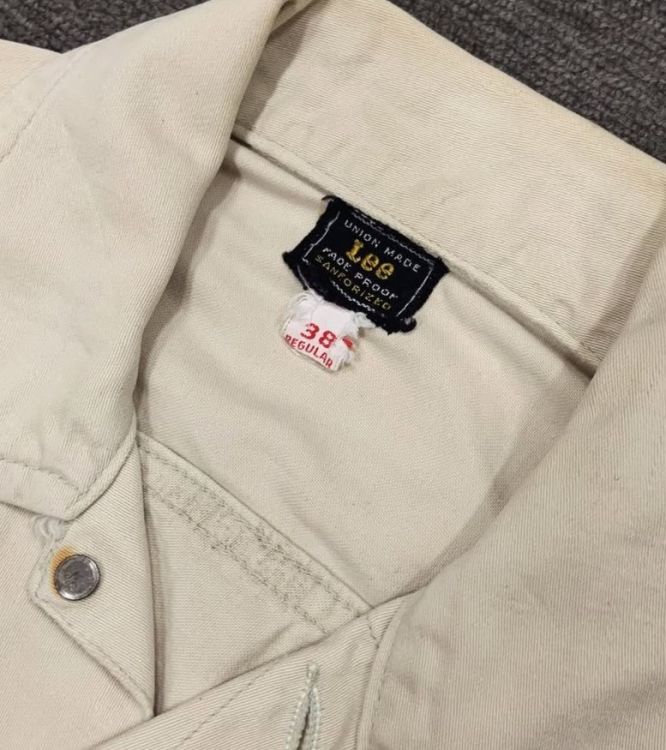
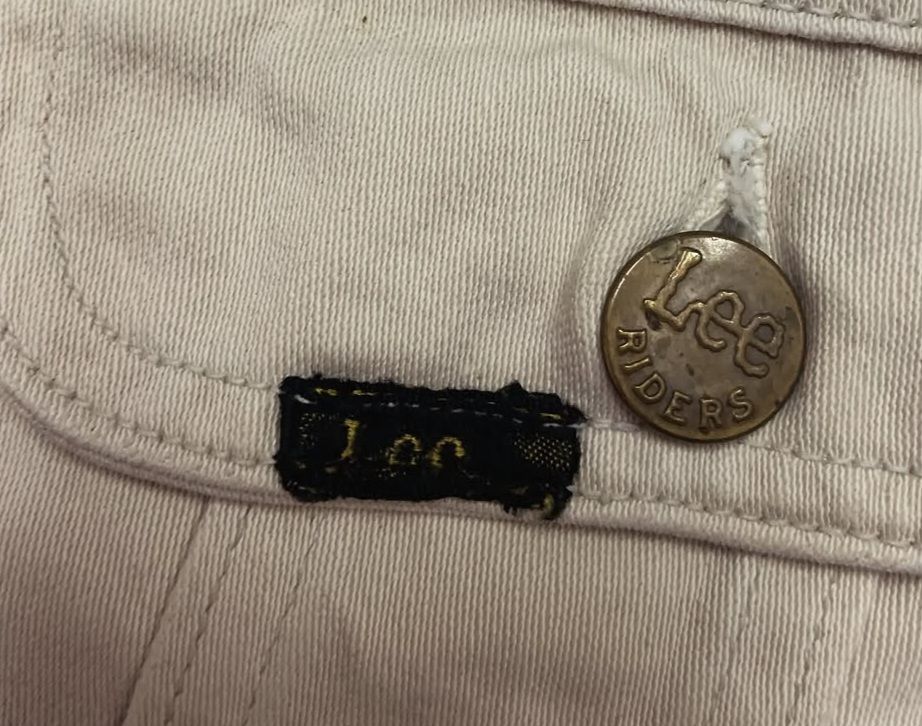
^Continuing with the theories previously mentioned above l found this jacket on Hundredbuyers the other day. Difficult to ascertain whether this 1958 original prototype jacket has an R after the word Lee on the small black pocket tag but it certainly doesn't look like it. So the R on the pocket tags on Lee jackets didn't exist in 1958 but they were definitely there by 1959. Mystery solved at last.
-
Cool, you can lend it to us then when you finished with it ☺️
-
Something l've wanted an answer to for a long time, and that is - What do the A, S, F (and the rarer 'l' stamp) signiify on vintage 60's Levi's 501 patches? The original ASF theory, which has been around for c.30 years was based on the idea that Levis 501 patches were given a quality letter of approval stamped in black ink on the patch, usually visible above the lot 501 stamp: A standing for the top quality, S standing for Satisfactory and F standing for Failure. Had to borrow this pic from a post BF put in the Denime thread as googling anything these days is like looking for a needle in a haystack. I thought that this theory was probably the best explanation. The only flaw in this theory for me was that there were many pairs from this era that didn't have these letter stamps on their respective patches, plus the added fact that you would find pairs with different factory numbers or letters with these stamped-patches making it impossible to determine their meaning or origin. For example, most pairs with an F stamp on the patch weren't Failures at all, just regular 501's. And then there was the rare 'l' stamp, something l've only ever seen on images but can't locate one at present. What did that stand for? Well apparently before the company's introduction to a fully computerised system c.1970 these stamps were Distribution centre initials. Factories across the States were at full steam during the 60's and had no more room to store finished garments, so Distribution centres were created to solve the storage problem. So 3 centres : Amarillo (TX), San Jose (CA) and Florence (KY) with the I stamp standing for (possibly) international, when Levi's jeans were first being distributed across to Europe. This theory must be credited to @Denimseeker but makes perfect sense to me. Also to add weight is the fact that you only find pairs made in the 1970's and early 80's with IRREGULAR stamped either on pocket bags or patches, but nothing earlier, gives the impression that there was a more simplified approach to quality control by that time. Anyway, don't want to rabbit on forever. I'm not promoting anything here, but if you want the full storie(s) and your still on instagram, follow Denimseeker - it's a great read and for me it's a mystery solved.
-
If it's any help, on original vintage Levis 501 jeans, l'm certain that the A, S, F and l letters are just the Distribution centre initials. Cannot remember what the different abbreviations stand for, but @Denimseeker stated his case in a post sometime back on instagram and it made total sense to me (will have a look back later and see if l can find it and a timeline). Basically what l am saying is to forget the A,S,F,l abbreviations as the single letter stamp doesn't make any difference to the details of the jeans at all, as the factory stamps and matching 'SF 207' wash tags determine the details, not the Dc stamps. It may not be of any relevance however 😅
-
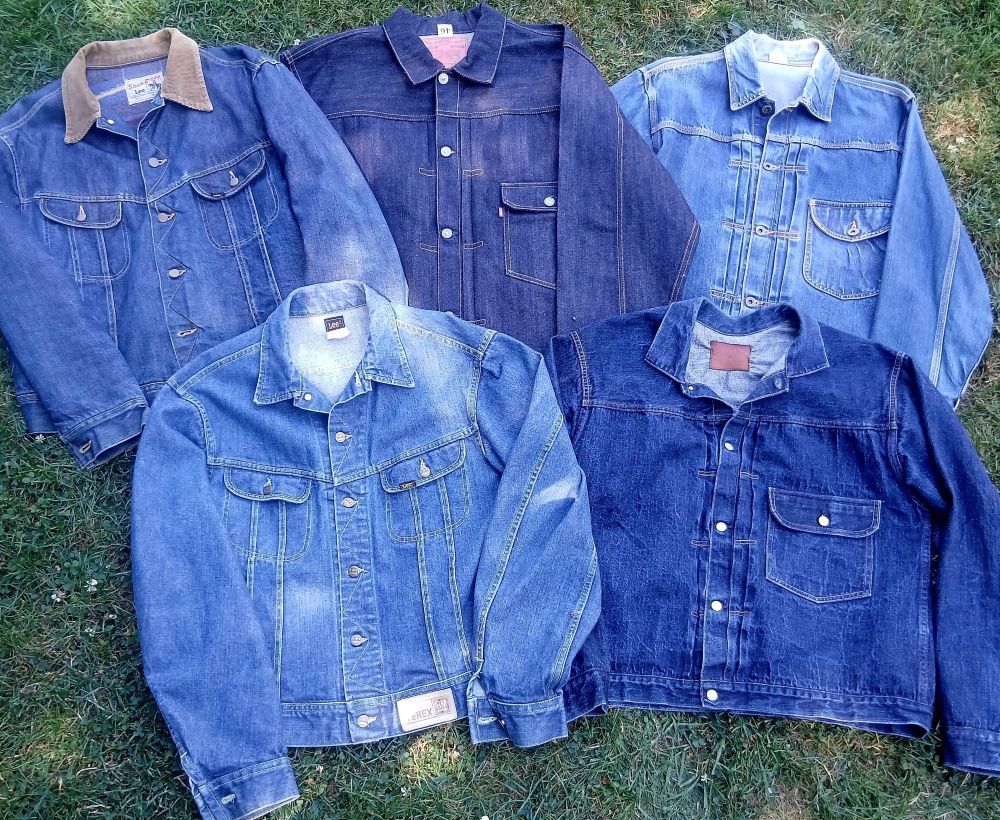
Again, hot and bothered and don't know what to do with myself due to working outdoors in this heat. So giving another visual representation of the exam question, with focus on the 3 or 4 that l actually do wear - FW42 506XX is there just for colour comparison as it's still unworn and the 30's Lee cowboy is rarely worn as it's a little snug. ^top left to right - early 60's 101-LJ Stormrider, Freewheelers 1942 506XX, 1930s Lee 101J and bottom row L to right - Late 70's Lee GM TEREX jacket and my Warehouse 1927 506XX, which is my regular wearer. Also have another 101J in London. Edit - the lighter areas are because the photo is taken under treeshade
-
INTEREST CHECK: Next Competition? - POLLS ARE FOR REAL CLOSED NOW!
Dr_Heech replied to Broark's topic in superdenim
After all this talk l've decided to opt out of this and stick with what l have, which is enough, believe you me. Good luck with the evolution of this contest/tour, looking forward to how it grows 🙂 -
INTEREST CHECK: Next Competition? - POLLS ARE FOR REAL CLOSED NOW!
Dr_Heech replied to Broark's topic in superdenim
Yeah what with Lvc then Csf, l'm rather partial to front pockets like my SC47'S or FW47'S, where l can get the majority of hand in them. -
INTEREST CHECK: Next Competition? - POLLS ARE FOR REAL CLOSED NOW!
Dr_Heech replied to Broark's topic in superdenim
Not been involved in a contest since l first joined sufu (RoyxCone) so yes, l would be interested in partaking. Little Hand or possibly Rockets gets my interest, although the latter have shallow front pockets, is that correct? -
Denim Blunders, Reflections and General Nonsense.
Dr_Heech replied to cmboland's topic in superdenim
Maybe a subsidiary of SpaceX ?


